
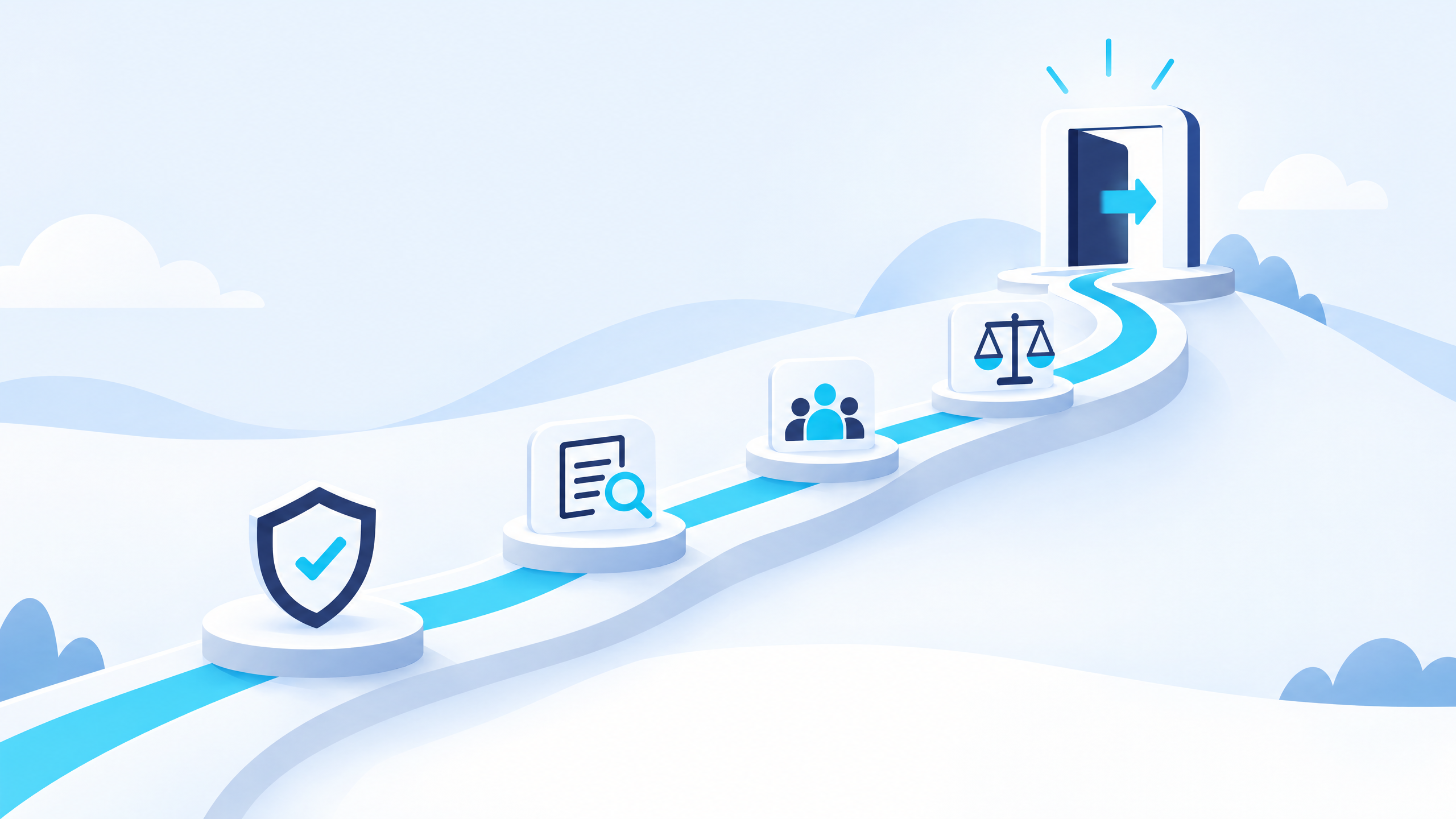
A website is trustworthy when a real person can find what matters, understand the next step, and see who is responsible for fixing a problem. A polished design can support that. It cannot substitute for it.
Editor’s note: This article is part of a retrospective published on October 16, 2026. Its displayed date identifies where the documented work fits in the series timeline.
That distinction matters because business owners are often shown websites as finished objects. Nice colors. Clean photos. A few reassuring lines of copy. Then everyone moves on.
But your website is not a framed brochure on a wall. It is part of the way someone decides whether to contact you, trust your explanation, or take the next step. It is also where you discover whether you can correct a problem when something important is hidden, inaccurate, or dependent on someone else.
On October 15, I documented a website check that exposed a dependency limiting control over part of the outcome and a contact page hidden from search discovery. I am not using that check to claim a measured business result. The lesson: essential paths can be missing even when a site looks complete. Trust comes from checking the path, not admiring the finish.
What does a visitor need to trust your website?
Start with the human question: “Can I quickly tell who this business is, what it can help with, and what I should do next?”
A visitor should not have to hunt for the basics. Your identity, offer, contact route, and expectations should be clear in the places where a reasonable person would look. If you charge for a conversation, say enough for someone to understand what the conversation is about. If you serve a specific kind of customer or problem, explain that plainly. If a next step has limits, name them instead of letting a visitor guess.
This is not about cramming a site with disclaimers or turning every page into a sales pitch. It is about reducing avoidable uncertainty. A clear answer is more useful than an impressive-sounding one.
Structure helps. Headings should let a reader scan an important page and predict the answer. I wrote more about that discipline in my build log on basic SEO heading structure. Good headings do not create trust by themselves. They do make evasive copy easier to spot.
Can people actually find the important next step?
A trustworthy site does not make visitors solve a puzzle to contact you, understand an offer, or find a key policy or answer. The next step needs to be visible and usable, not merely present somewhere in the site.
This is where appearance can fool you. You may know exactly where a page lives because you built the site or review it every week. A first-time visitor does not have that map in their head. Neither does a search system. If an important page is hidden from discovery, its existence is not the same thing as its availability.
The October 15 check was a useful reminder for me. A contact page can be on a website and still deserve a real discoverability check. I do not mean obsessing over dashboards or chasing a magic technical setting. I mean asking a plain question: can the people and systems you expect to reach this page actually find it?
A practical test is to open the site as if you know nothing about the business. Can you locate the page without a saved link? Is it accurate? Does it give a clear next action? Then check whether the page is available for search discovery. If you cannot explain how you checked, you have not finished checking.
For the broader lesson behind that original review, see my website check on vendor lock-in. The point here is not to relive a single issue. It is to treat findability as a trust responsibility.
Who owns the outcome when something breaks or disappears?
This is the uncomfortable question that separates a brochure from a trust system.
You do not need to build every part of a website yourself. Most small-business owners should not spend their week doing that. But you do need to know what you control, what relies on another party, and who is accountable for correcting a problem.
“Someone handles that” is not ownership. It is a gap in the plan.
Ownership means you can answer a few basic questions without a long investigation:
- What information or action is essential for a visitor?
- What dependency could hide, limit, or change it?
- Who is responsible for noticing a problem?
- Who can make the correction?
- How will we verify that the important path is working again?
You do not need to become technical or manage every detail. You can delegate and still own the outcome. Clear ownership makes delegation more useful because everyone knows what “done” includes.
A platform, designer, or outside helper can contribute to your site. None of that removes your responsibility to understand the critical path. If your contact route matters, know who is responsible for it. If your service explanation matters, know who keeps it accurate. If a key page is not being found, know who will investigate and confirm the next check.
How do you run a five-minute website trust audit?
Do this before calling a website finished, and repeat it after meaningful changes. Pick one page or action that matters most. For many businesses, that is the contact route. For yours, it might be an appointment request, service explanation, or location information.
- Name the must-find item. Write down the single page, answer, or action a visitor should not have to struggle to locate.
- Test the path like a newcomer. Start from the homepage and find it without relying on your memory, bookmarks, or insider knowledge.
- Check discoverability and accuracy. Confirm that the important page can be found by the people and search systems you expect to reach it, and that its information is current.
- Identify the dependency. Ask what could block, hide, or alter that path. Do not assume a polished site has already answered this.
- Assign an owner and a verification step. Record who will fix a gap and how that person will confirm the correction.
Keep the result short. A note with the path, the finding, the owner, and the next check is enough. The value is not paperwork. The value is making uncertainty visible while it is still manageable.
The practical takeaway
Your website earns trust through clarity, findability, and accountable ownership. Design matters, but it is only one layer. A visitor needs an honest explanation and a visible route forward. You need a way to spot what is hidden, understand what you depend on, and correct a gap without guessing.
Pick one important path on your site today. Can a first-time visitor find it? Can a search system discover the page? Is the information accurate? And can you name the person responsible for the fix if any answer is no?
If you are unsure whether your website is helping people take the next step, reach out for a practical review focused on clarity, discoverability, and who owns the outcome.
What is the one important action or piece of information your website currently makes visitors work too hard to find?
Build Log Retrospective Series hub | Previous: Why Headings Still Matter in an AI-Search World | Next: Why Production Publishing Should Be Boring and Repeatable
Find me across the web


Stay curious, my AI friend. It's the secret sauce - think like you are seven. - Ryan