
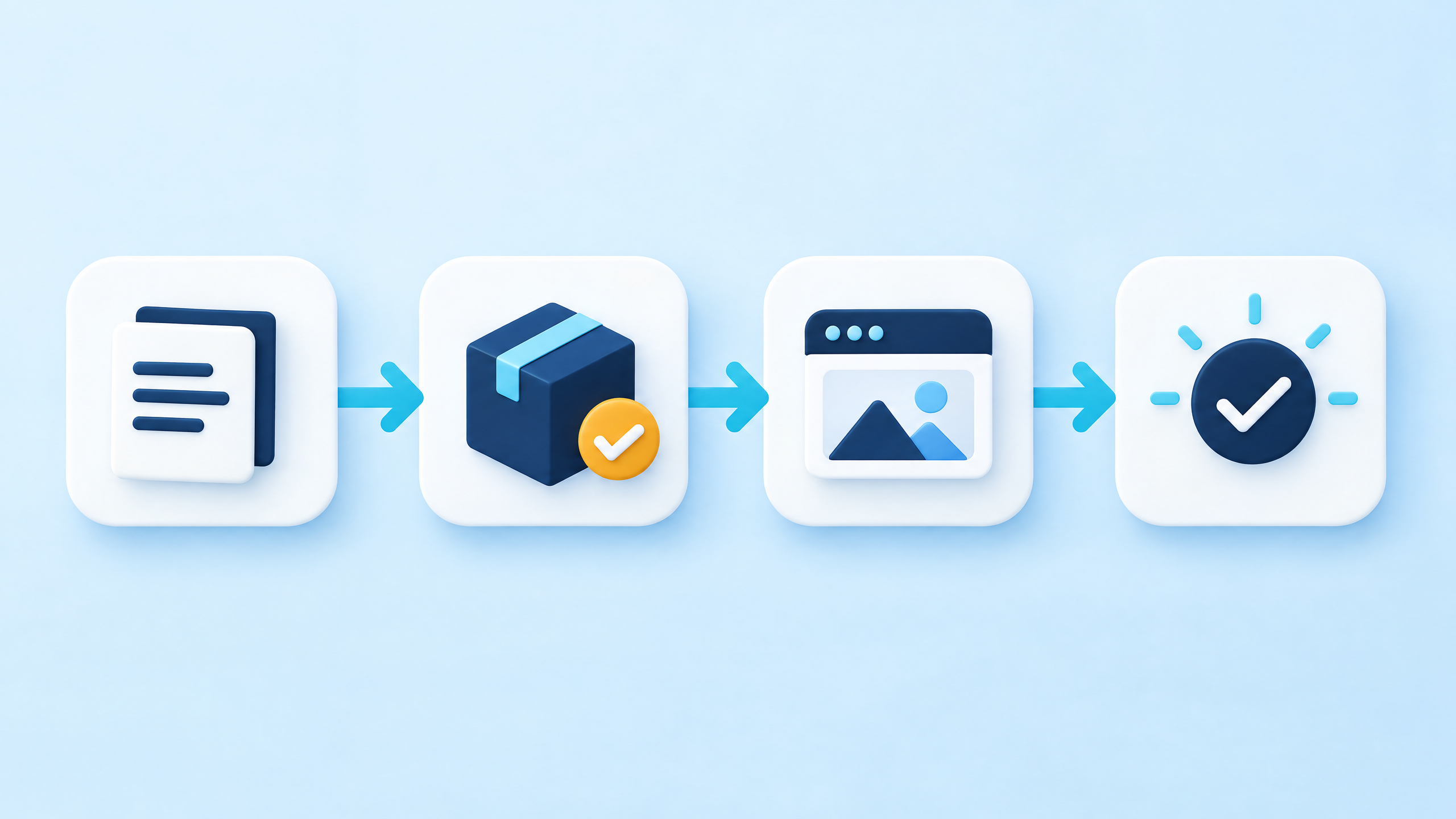
Production publishing should be boring because a website change deserves a known path from “ready” to “live.” The less that path depends on a last-minute memory test or one person improvising under pressure, the more attention you can give to the actual change.
Editor’s note: This article is part of a retrospective published on October 16, 2026. Its displayed date identifies where the documented work fits in the series timeline.
This is not a call to turn a small-business website into a giant technical project. I want routine publishing to be a short, repeatable practice that works on an ordinary Tuesday and remains understandable when the day is not ordinary.
During documented work on October 15 and 16, I established and tested an automated path for releasing a prepared static version of a site. The lesson was simple: routine work deserves a process you can inspect, test, and recover from without inventing a new answer every time.
Why is boring a publishing quality standard?
“Boring” gets mistaken for “basic” or “behind the times.” I mean something more useful: a sequence that is clear enough to repeat, check, and explain.
A fragile publishing process often has a familiar shape. A change is ready. Someone remembers a special step. The pressure rises because nobody is sure what changed or how to confirm the result. The process is asking memory and urgency to do too much.
A boring process replaces that scramble with a known sequence. Confirm the change. Prepare what will be published. Release it. Check the visible result. Record anything unusual. Keep a trusted prior version available.
None of that guarantees every change will be right. It makes the work inspectable, which matters when you need to reconstruct a rushed decision later.
The same principle applies beyond a website. My broader AI infrastructure lessons are not about making work look sophisticated. They are about setting clear boundaries so a person can review what happened and make a sound next decision.
What does it mean to separate building from publishing?
Here is the plain-English version: prepare the website change before publishing it, then publish the prepared output. Do not make fresh edits on the live website during the publishing step.
That distinction changes the question from “What do I need to do right now?” to “What did I prepare, and does the live result match it?” The second gives you something concrete to inspect.
For a service business, this might be an updated service page, a new article, or a corrected contact detail. You should know what is meant to go live before it goes live.
That ownership question is closely related to the one behind my website trust check. A polished site is not enough if no one can explain how an important issue will be found, corrected, and checked.
Why should you test the uninteresting edge cases?
The visible change is usually the easy part. The awkward cases are where a process earns its keep.
In my October 15 and 16 work, the routine release path needed testing, and edge cases in the publishing sequence needed resolution. That is a reminder that a process is not dependable merely because the happy path worked once.
Ask practical questions before calling a process done:
- What happens the first time we use this process after a change?
- What should the public page look like after publishing?
- Which basic details must be present and correct?
- Who notices if the result is not what we prepared?
- Where do we record the unusual thing we learned?
Write down the answers while they are fresh. If a step only exists in someone’s head, it is not repeatable yet.
When is a release actually done?
A release is not done the moment the change is sent out. It is done when the basic live check is complete and the next person can understand what happened.
That does not require a formal ceremony. Open the page, confirm the intended content is present, make sure the important path works, and note any follow-up. Make the moment after publishing part of the work, rather than a hopeful assumption.
I also want recovery to be part of “done.” Keep a known, trusted prior version available and be clear about who can decide to return to it. That respects the possibility that a change can be wrong, incomplete, or simply not ready.
That is operational care, not bureaucracy. It lets a business move deliberately without pretending that a rushed manual push is a strategy.
What belongs on a one-page release checklist?
Start smaller than you think. A one-page checklist is enough if people will actually use it.
Practical takeaway: Use this six-step release checklist for every meaningful website change:
- Confirm the intended change. State what is supposed to be different in plain language.
- Prepare the publishable version. Make sure the version you intend to release is the one being reviewed.
- Release only the prepared output. Avoid making fresh edits during the publishing step.
- Check the live result. Confirm the important page, content, and next action appear as intended.
- Record the edge case. Add any unexpected detail to the checklist or notes so it is not rediscovered later.
- Keep the trusted prior version available. Know who owns the decision to return to it if the change needs to be undone.
Run the same checklist before adding more automation. Consistency first. Add complexity only when it solves a real, documented problem.
If your website publishing process feels fragile or lives in one person’s memory, reach out for a practical conversation about making the workflow clearer and easier to repeat. No big rebuild is assumed.
Frequently asked questions
Do I need a complex system to make website publishing repeatable?
No. Start with a written sequence, a clear owner, a basic live check, and a trusted prior version. The goal is a process people can follow and improve, not complexity for its own sake.
Should I make edits directly on the live website when I am in a hurry?
Treat urgency as a reason to follow the checklist more carefully, not as a reason to skip it. Prepare the change first, publish that prepared version, then verify the visible result.
What is the first publishing step I should document?
Document the special step that only one person remembers. Write what triggers it, who checks it, what a correct result looks like, and what to do if it does not look right.
Build Log Retrospective: Series hub | Previous: Website trust | Next: Limiting publishing access
What part of your publishing process still depends on someone remembering a special step, and what would it take to turn that memory into a repeatable check?
Find me across the web


Stay curious, my AI friend. It's the secret sauce - think like you are seven. - Ryan