
Why Human Approval Is a Feature of a Serious AI Workflow
Yes, human approval is a feature, not a drag on an AI workflow. AI can draft, organize, and suggest, but a person still has to decide whether the work is true, useful, appropriate, and ready for the real world.
Editor’s note: This article is part of a retrospective published on October 16, 2026. Its displayed date identifies where the documented work fits in the series timeline.
That decision is where responsibility lives. A polished draft is not the same thing as a sound business decision. If you are a busy owner, you do not need another system that produces more material for you to worry about. You need a clear point where the work pauses, gets checked, and either moves forward or goes back for revision.
In my own work, I treat AI as a strategic partner, not an unattended substitute for judgment. It can help me produce and organize a draft. It does not get the final say.
What does a human approval gate actually protect?
Approval protects the gap between generating words and standing behind them.
An AI-assisted draft can sound confident while missing context, carrying forward an unsupported claim, or aiming at the wrong reader. Those are not exotic failures. They are ordinary reasons to slow down long enough to ask a few useful questions.
Before I approve work, I want to know: Is the claim supported? Can I trace the source? Does the wording match the situation? Is this right for the intended audience? Do I understand what changed since the last version?
That is why human-in-the-loop AI matters. The point is not to distrust every draft or create a ceremony around every sentence. The point is to put human judgment where it has a real job: deciding what deserves to become public or operational.
Approval is not a guarantee that every mistake gets caught. It is a practical control that makes the review point visible instead of leaving it to chance.
Why leave AI-assisted work in draft status?
Because draft status is a control, not evidence that the workflow is unfinished.
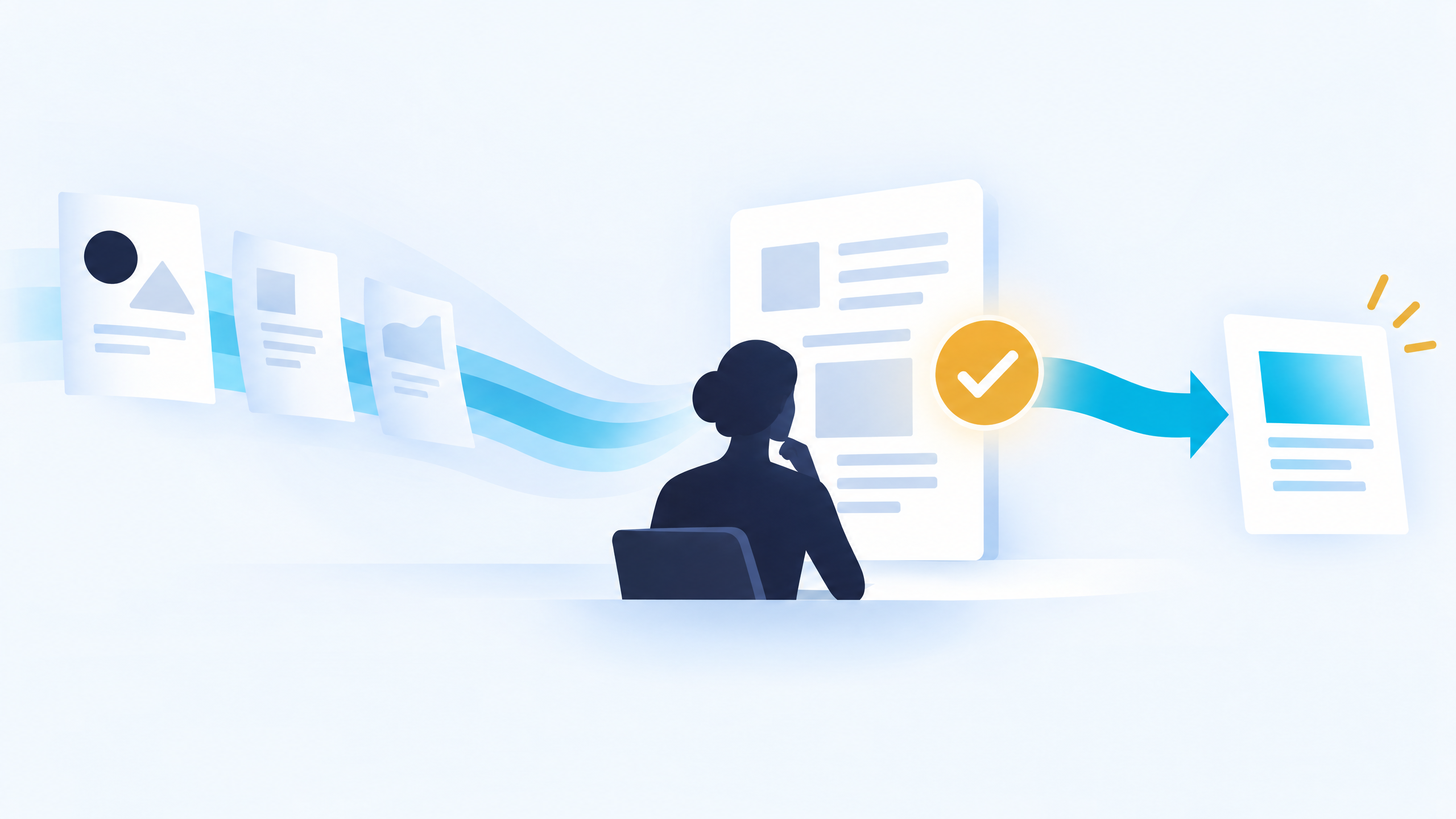
A simple serious workflow looks like this: AI proposes or organizes work; the output stays a draft; a person reviews it; that person explicitly approves it or returns it with a reason. The pause is intentional. It gives the operator a chance to inspect meaning, source, audience fit, and readiness before the work crosses a line that matters.
That matters in small businesses because the same owner is often carrying the brand, the customer relationship, and the final decision. Handing off a draft is useful. Handing off accountability is not.
The retrospective series this article closes is kept as drafts for review for the same reason. Review belongs inside the publishing process. It is not something bolted on after the work feels finished.
How do you keep review practical instead of making it a bottleneck?
Do not start by reviewing everything with the same intensity. Start by naming the decision that needs a human yes.
For a public article, that might mean checking the core claim, source material, tone, links, and reader promise. For an internal recommendation, it might mean checking the facts, the assumptions, and the decision being requested. The checklist should be short enough to use on an ordinary day.
Here is the review loop I recommend:
- Verify the claim. Ask what evidence supports it and whether the wording says more than the evidence does.
- Inspect the source. Make sure you can identify where the important information came from.
- Check the change. Look at what is new, removed, or reworded instead of treating the draft as a blank slate.
- Confirm the audience. Decide whether this is useful, clear, and appropriate for the person who will receive it.
- Approve or return it with a reason. A clear reason turns a rejection into feedback the workflow can use next time.
The goal is not line-editing forever. It is a repeatable review step that matches the risk of the decision. If the work will be public or will shape a real business action, the approval should be explicit.
Why do sources and recoverable changes matter to approval?
A reviewer cannot make a sound call when the original material has disappeared or the path from source to draft is unclear.
Keep the source material. Keep enough context to understand why it mattered. Keep changes recoverable. Do not silently rewrite history and then expect a reviewer to judge what happened.
That is also why a capture-first knowledge practice is useful before you expect AI to remember your business. Good review depends on traceable inputs. If you cannot explain where a piece of information came from, whether it is current, or why it entered the workflow, it should not quietly become trusted AI knowledge.
This does not require a complicated process. A source, a date, a sentence of context, and a review decision can be enough to make the next decision more understandable.
What should you change this week?
Add one explicit approval gate to one AI workflow. Pick the moment just before something becomes public or affects a real business decision. Write down who approves it and what that person must check.
Practical takeaway: Before an AI-assisted item moves forward, ask these five questions:
- Is the claim supported?
- Is the source traceable?
- Is the change understood?
- Is it right for the intended audience?
- Am I comfortable approving it?
Keep rejected drafts and the reason for rejection recoverable. That gives you a way to learn from a bad fit without pretending it never happened.
If you are deciding where AI should assist and where a person should approve, I can help you map a clear, reviewable workflow around your actual business process. Start a conversation when you want practical guidance without handing judgment over to automation.
Continue the retrospective Previous: Why an AI Brain Needs a Capture Layer Before It Needs a Database Series guide: 30 Days Under the Hood Work With Me: Map a reviewable workflow
Related reading
- Human-in-the-loop AI for a broader look at keeping judgment involved as AI work grows.
- AI knowledge capture for the source-and-context habit that gives review something real to inspect.
Where in your current AI workflow would one explicit approval gate prevent the most expensive or embarrassing mistake?
Find me across the web


Stay curious, my AI friend. It's the secret sauce - think like you are seven. - Ryan