
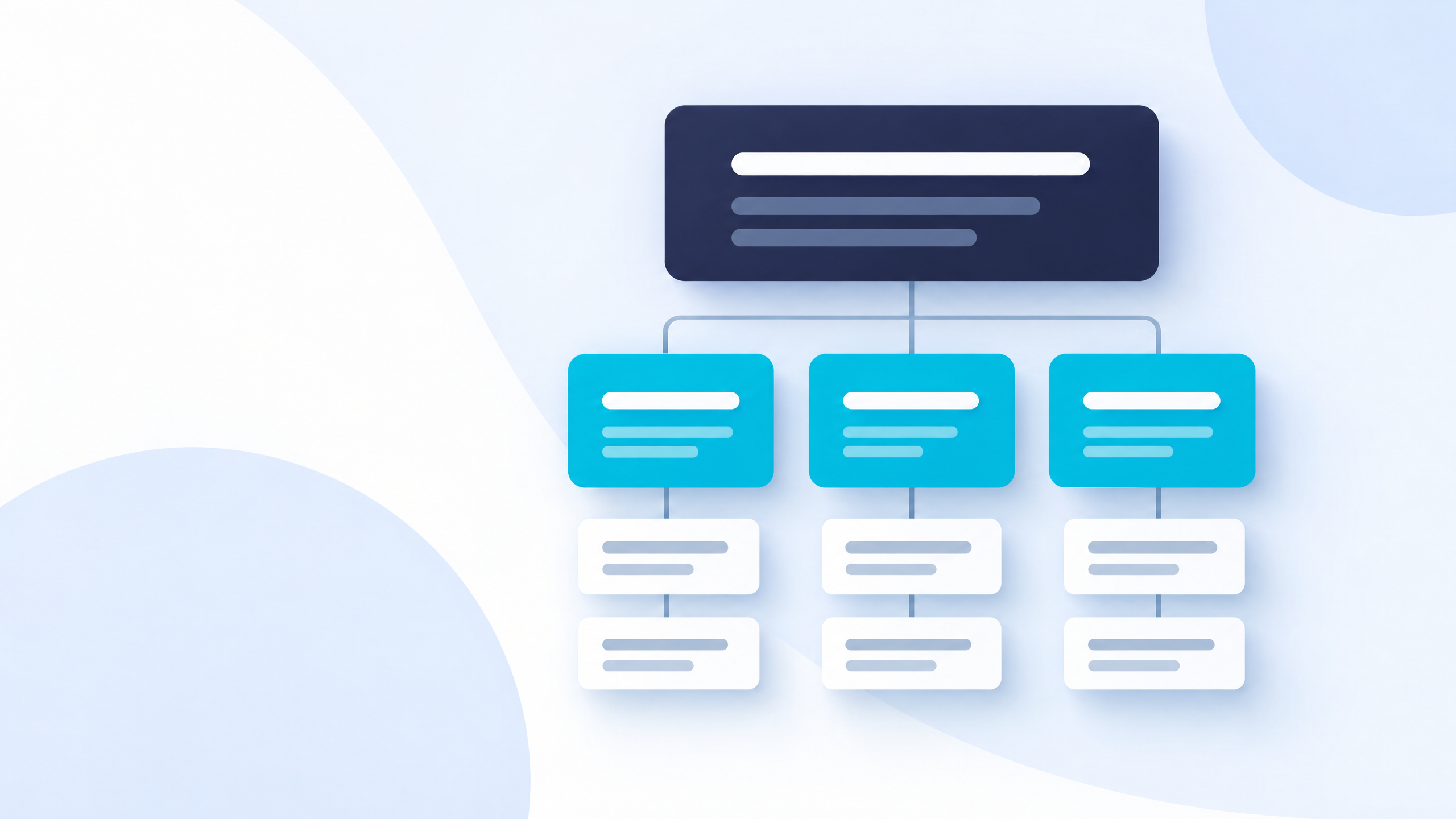
Yes. Headings still matter because they turn a page into an answer a busy person can scan, a writer can maintain, and a search or AI system can interpret with less ambiguity.
Editor’s note: This article is part of a retrospective published on October 16, 2026. Its displayed date identifies where the documented work fits in the series timeline.
If you run a small business, you do not need to turn every page into a technical project. You do need to make it obvious what the page is about, where the answer lives, and what a reader should do next. Headings are one of the simplest ways to do that.
On September 11, I published a build log on basic SEO heading structure. The useful lesson was not a trick for gaming a system. It was more practical: clear structure makes my thinking easier to inspect, the content easier to maintain, and the reader’s next step easier to find. You can see the starting point in my basic SEO heading-structure build log.
So why do headings still matter?
Because a page is not read from top to bottom by everyone who lands on it. A busy owner may be comparing options between meetings. A potential customer may be trying to confirm one detail. Someone else may arrive with a very specific question from search.
Before they commit to reading, they scan. Your headings tell them whether the page is likely to help.
A clear heading does three jobs:
- It names the section. The reader can see what question you are about to answer.
- It shows the order of the answer. The reader can tell what comes first, what supports it, and what is a detail.
- It keeps the page honest. If a heading promises an answer, the section underneath has to deliver one.
That third job matters more than people think. When I cannot describe a section cleanly, it often means the section is trying to do too much or does not belong on the page at all. A heading is a small test of whether the page has a real point.
Search and AI systems do not make this irrelevant. They are still working with the page you give them. A clear main subject and a sensible hierarchy provide useful context. That does not mean headings guarantee a particular search result or an AI answer. They do not. It means you are reducing avoidable ambiguity for both people and machines.
What does a practical heading hierarchy look like?
Start with one specific H1. It should state the page’s main subject in plain language. Not a slogan. Not three topics stapled together. The job of the H1 is to tell a reader, “This is the page you were looking for.”
Then use H2s for the major parts of the answer. For a service page, that might look like this:
- H1: Website clarity for small businesses
- H2: What website clarity means
- H2: What I review on an important page
- H2: What a practical next step looks like
- H2: Common questions before you start
If one H2 needs real subdivisions, use H3s underneath it. For example, “What I review on an important page” might include H3s for the page’s promise, the supporting information, and the next action.
The hierarchy should follow the thought, not a formula. Do not add an H3 simply because a template makes one available. Do not use a heading because you want to repeat a phrase one more time. And do not make every heading a vague label like “More information” or “Our approach.” Those headings force the reader to work before they know whether the section matters.
A better heading names the actual content: “How to choose the page to fix first” or “What to check before you add more copy.” Specific beats clever.
How do you write for AI-assisted discovery without writing for robots?
Write for the question behind the query.
People do not usually want a pile of terms. They want a definition, a decision, a process, a limitation, or a next step. Good headings make that structure visible. They can ask the question the reader is asking, then introduce an answer that gives context instead of a thin slogan.
For example, a section called “Why your contact page matters” gives you room to explain the issue. A section called “Contact page SEO services small business” reads like a note to a machine, not help for a person.
The practical middle ground is straightforward:
- Use the language your customers use when it is accurate.
- State the answer near the question instead of hiding it several paragraphs later.
- Add limits where they matter, especially when no single tactic can promise an outcome.
- Keep sections distinct so each one earns its place.
That is also why I treat page structure as part of a broader people-first, technically clear approach to SEO and LLM visibility. The goal is not to perform for an algorithm. The goal is to publish a useful answer that has a clear shape. For more context on that broader work, read the AEO intelligence stack build log.
Can you audit a page’s headings in five minutes?
Yes. Pick one page that matters to your business. Then ignore the paragraphs for a minute and read only the H1, H2s, and H3s.
Ask these five questions:
- Can I predict the page’s promise from the H1? If not, make the main subject more specific.
- Do the H2s tell a complete, logical story? Reorder them if the reader would need to jump around to follow the answer.
- Are the headings distinct? Combine sections that repeat the same point.
- Does every section answer the heading above it? Cut or rewrite sections that drift.
- Is the next action clear? A reader who got the answer should know whether to contact you, review a related resource, or take another appropriate step.
This review also exposes a common mistake: adding more copy when the real problem is organization. A longer page is not automatically a clearer page. Fix the structure first. Then decide what information is genuinely missing.
Practical takeaway
This week, take one high-value page and write its outline before editing the copy. Give it one specific H1, a short set of descriptive H2s, and H3s only where a section truly needs subdivisions. Read those headings out loud or view them as a list. If the page’s promise and answer are not obvious, restructure before adding more words.
Continue the retrospective Previous: Why Your Website Needs a Clear Machine-Readable Identity Series guide: 30 Days Under the Hood Next: A Website Is a Trust System, Not a Brochure
Related reading
Useful information buried in a hard-to-follow page is still hard to use. Want a second set of eyes on whether your most important page helps people find and understand the right answer?
Find me across the web


Stay curious, my AI friend. It's the secret sauce - think like you are seven. - Ryan