
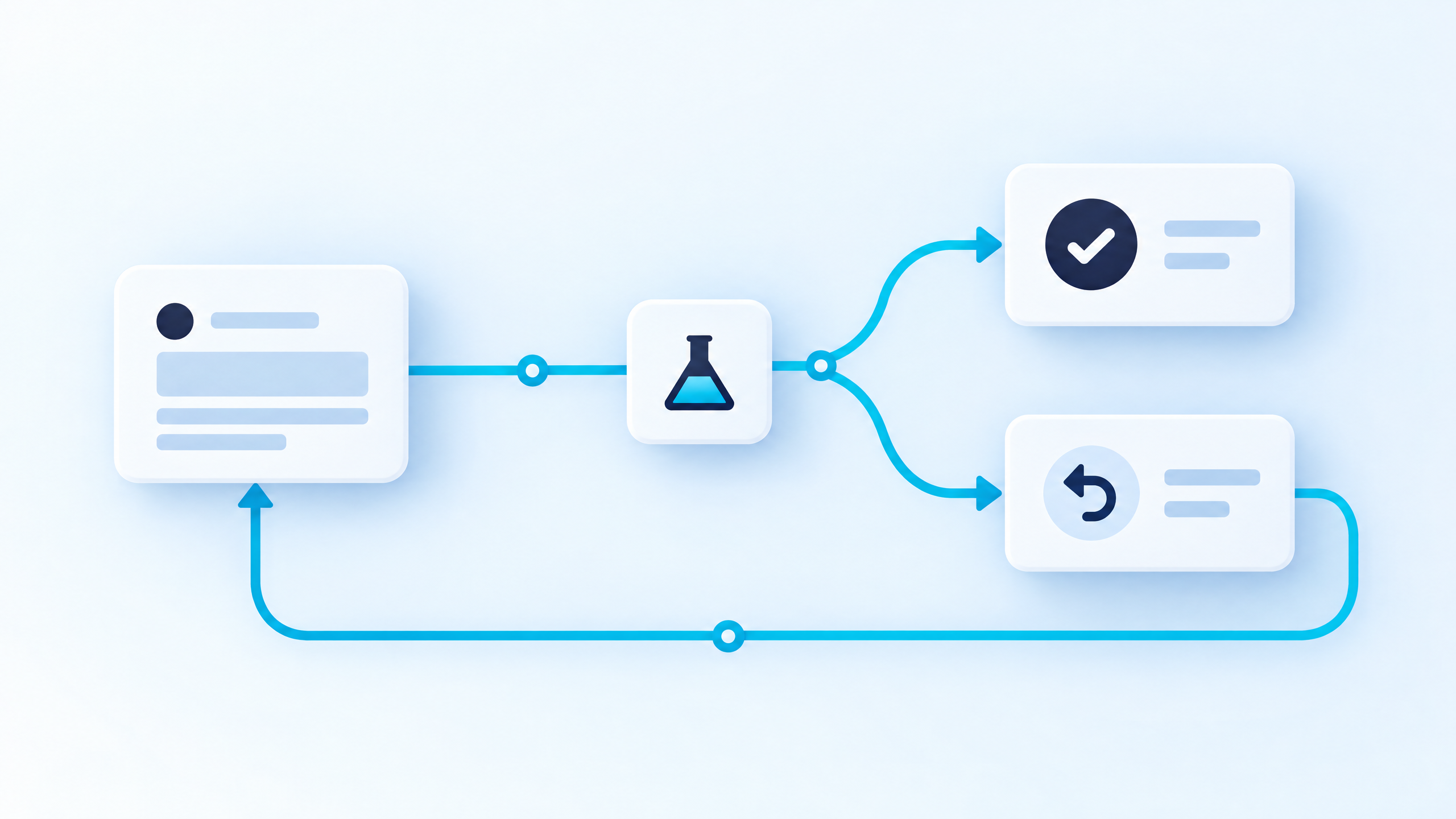
A website change is reversible only when you can explain, before it goes live, what the last known-good experience is, what you are changing, when you will stop, and how you will get back to the baseline. An old copy sitting somewhere is not an undo plan.
Editor’s note: This article is part of a retrospective published on October 16, 2026. Its displayed date identifies where the documented work fits in the series timeline.
My standard is simple: if I cannot state the undo path in plain English, the change is not ready to ship.
What does reversible actually mean before a website change ships?
Reversible does not mean nothing can go wrong. It means I have planned for the possibility that the change should not remain. I know the experience I am trying to preserve, I have limited the scope of the change, and I have decided how I will check that the original experience is back if I remove it.
A useful baseline is specific enough that another person could recognize it. “The website works normally” is too vague. “A visitor can still read the page, understand the offer, and take the existing next step without the new feature” is much better. The baseline is the agreement you return to, not a hazy memory of what the site used to feel like.
What needs to be clear before the change goes live?
Before I ship a meaningful change, I want six answers on one page:
- Baseline: What is the current, known-good visitor experience?
- Change scope: What exactly is being added, removed, or altered?
- Test boundary: Which live interactions will I examine, and when will I review them?
- Stop condition: What would make the right decision to remove the change?
- Decision owner: Who is responsible for making that call?
- Restoration check: How will I confirm the prior experience is back?
The stop condition deserves special attention. It is not “if people do not like it,” because that is too loose to guide a decision. It might be that the new element makes the existing path harder to understand, adds distraction without a clear purpose, or conflicts with the experience you intended to protect. The point is not to manufacture a score. The point is to name the judgment before the pressure of having already shipped it shows up.
For related operating context, I have written about making website work dependable without making it mysterious. The common thread is not more process for its own sake. It is fewer important decisions left to memory or improvisation.
How should a live test inform the decision?
A live test should help me decide, not help me defend a decision I already made.
On October 4, I added an AI-video feature across my website. On October 16, I tested it through live interaction. Then I removed it because it had not clearly earned a lasting place in the experience, and I restored the baseline setup.
A test is useful when it has a boundary. Decide what is under review. Look at the actual experience. Make the call. Do not let “we already launched it” become the reason it survives. That is sunk-cost thinking dressed up as product strategy.
This is also where clarity and ownership meet. A previous website check reinforced for me that a business owner needs to know what matters on the site, who owns the next step, and how a problem will be checked. Reversibility applies the same thinking to a change before it becomes a bigger question later.
Why is removal part of shipping, not an admission of failure?
Because shipping is a decision cycle, not a finish line.
When a feature does not clearly earn its place, removal can be the cleanest act of judgment available. It keeps the website focused on the experience that was already understood instead of accumulating additions that nobody can explain or defend.
On October 16, I removed the AI-video feature after the live test and restored the baseline. The useful lesson was not that every test should end in removal. It was that removal was available, deliberate, and complete enough to return to the agreed starting point.
That is why I separate “can we add this?” from “can we undo this?” The first question often gets all the attention. The second protects your ability to learn without turning every experiment into a permanent obligation.
How do you verify that the baseline is really back?
Do not declare the change undone just because the new thing is gone. Revisit the original experience you wrote down. Confirm the new behavior has been removed. Check the visitor path you intended to protect. Record the decision and what you learned.
Recording the decision matters. I do not want a change to disappear from the story as if it never happened. Keeping a clear record of the baseline, the test, the decision, and the restoration preserves context for the next person, including future me. It also follows a principle I use more broadly: preserve source material, keep provenance, and make changes recoverable rather than silently rewriting history.
The record can be short. “Tested this change on this date. It did not clearly earn a lasting place. Removed it and checked the prior experience.” That is enough to make the decision legible without turning it into a technical diary.
Practical takeaway: use a one-page reversibility check
Before your next website change, write down these five questions and answer them without jargon:
- What is the baseline experience I am protecting?
- What exactly changes for a visitor?
- What will I observe during the test, and what is the boundary?
- What condition means I should stop and remove the change?
- How will I verify the prior experience has been restored?
Then name the person who owns the decision. If no one can explain those answers in a short conversation, pause. The change may still be a good idea, but it is not yet reversible in a way you can rely on.
Build Log Retrospective Series hub · Previous: Why I Removed a Feature After It Shipped · Next: Why an AI Brain Needs a Capture Layer Before It Needs a Database
Frequently asked questions
Is a reversible website change risk-free?
No. A reversal plan does not guarantee a smooth outcome or remove the need for care. It gives you a defined way to stop, remove the new behavior, and verify the baseline rather than improvising under pressure.
Can a small change really need an undo plan?
Yes, if the change affects what a visitor sees or does. The plan can be brief. The size of the document is not the point. Clear ownership, a stop condition, and a restoration check are.
Who should decide whether a change stays or goes?
Choose before launch. The responsible person should have the authority to make the call using the agreed test and stop condition. That is cleaner than waiting for an unfocused debate after the change is live.
If you are planning a website change and want the rollback decision made before launch, reach out for a practical review of the baseline, test boundary, and restoration plan.
What website change have you delayed because you could not explain, in plain language, how you would undo it?
Find me across the web


Stay curious, my AI friend. It's the secret sauce - think like you are seven. - Ryan