BUILD LOG · NOVEMBER 18, 2026
I wanted a better Jira integration. What I needed was a shortlist.
We already used Jira for support. The problem was that every new email in our support inbox could become a ticket. One was a sales inquiry and another was a pitch. I asked Seven, my AI assistant, to help me fix how those emails got into Jira.
We got pretty far. We tested attachments, customer replies, and what happens if the same email gets processed twice. We were talking about where to host a worker and what database it should use. Then I stopped and asked myself: what do I actually want to happen when a new email comes in?
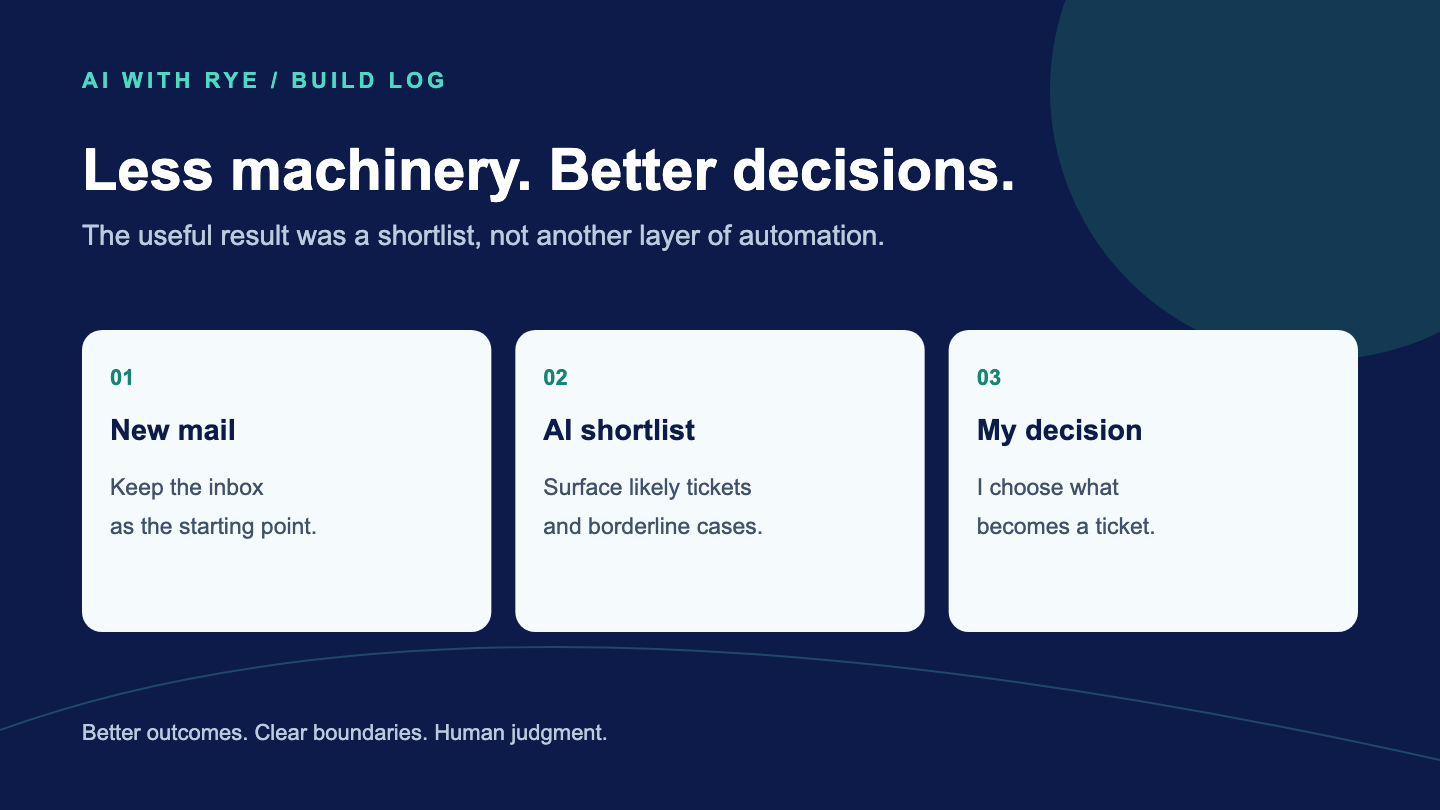
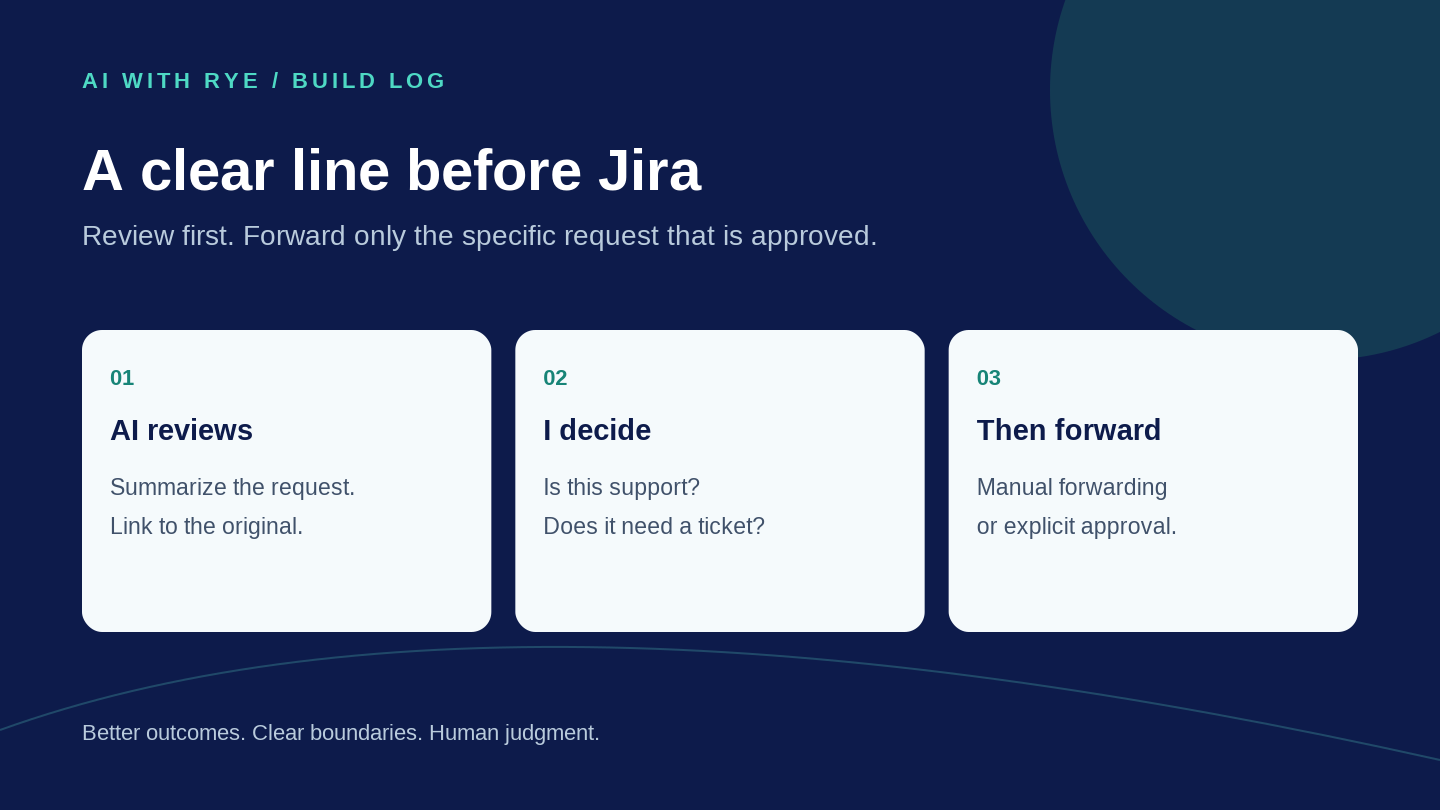
I want to see anything that looks like a support request, including the ones Seven is unsure about. Give me a summary and a link. I’ll decide if it goes into Jira.
That changed the job. We turned off Jira’s automatic pull from that inbox and set up four checks a day. I can forward an email myself or tell Seven to create a ticket for that specific request. The whole thing got simpler once I described the decision I wanted help making.
How I talk to my AI now
I used to think more about how to write the prompt. These days I talk to Seven about what I need to get done, what a good result looks like, and where I want to make the call myself. Here’s how that works in my day-to-day.
Website cleanup. “Crawl the site and remove every mention of this print finish” sounds specific. But the crawl surfaced sales claims, copy that correctly explained the limitation, and customer reviews. Those need different treatment. A better brief is “Give me a spreadsheet I can approve row by row. Show me what the customer sees today, the exact replacement, and where the edit goes.” I can review the actual changes before any of them go live.
Early website reporting. “Give me a clear picture of how the site is performing after launch” is a good starting point. What I needed was “Give my partner a credible first read. Lead with the strongest thing we can verify. Call out team testing and tell me if the old site has comparable data.” We had an early signal from search visibility and some recorded site activity. We didn’t have a reliable baseline from the old site, so the team now has a starting point for the next report.
Government contracts. “Find marketing contracts” would give me a list. “Show me whether bidding is worth our time” gives the research a job. I asked for comparable awards, how many offers they received where that was published, and which eligibility requirements we’d have to meet. One example drew six offers and another drew 33. That’s a better basis for deciding where to spend a day on a proposal.
The way I’d brief an AI assistant
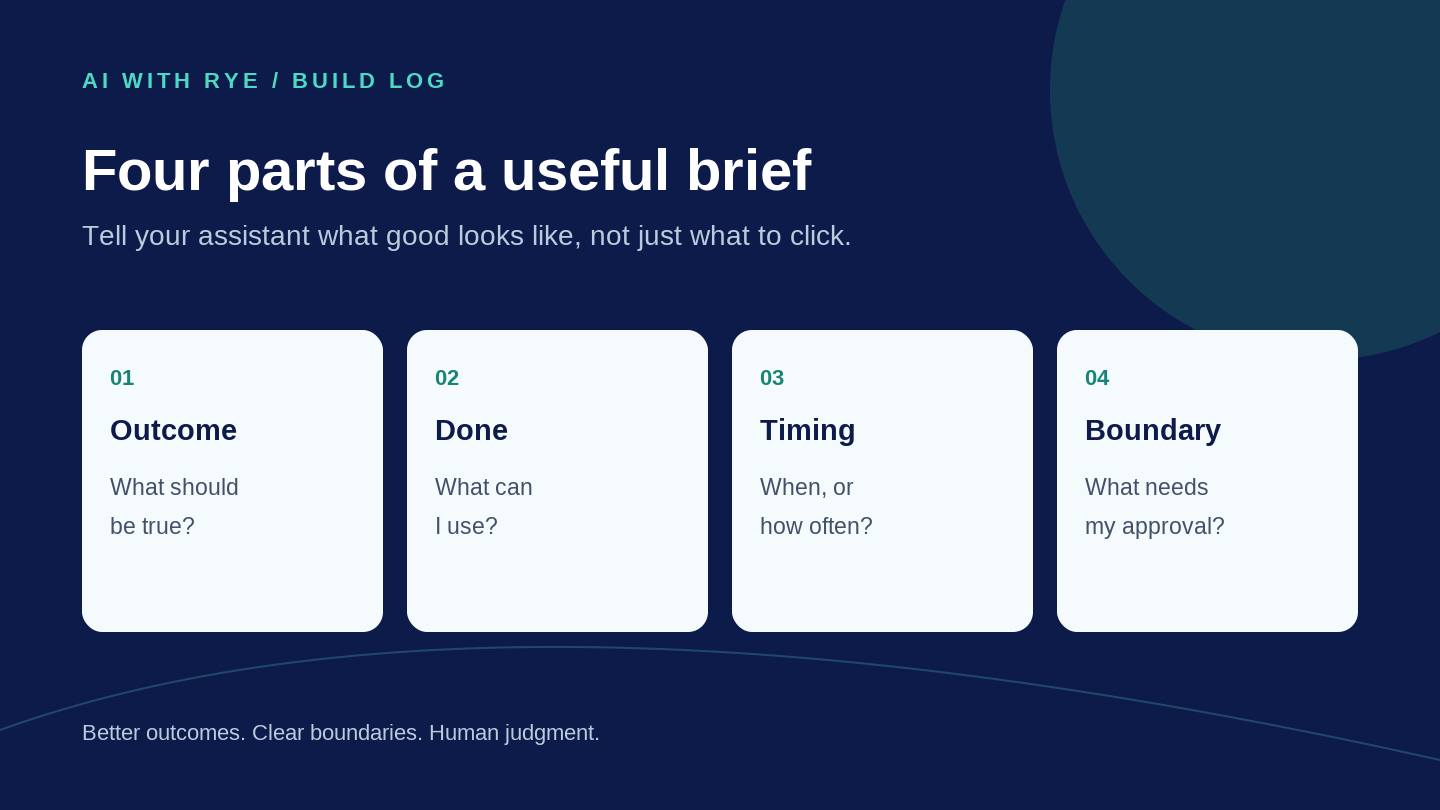
- Name the outcome. What should be true when the work is done?
- Define done. What do you need to see or be able to use?
- Set the timing. When do you need it, or how often should it happen?
- Draw the line. What can AI decide, and what needs your approval?
For our support inbox, that’s “Check it four times a day. Show me likely tickets and anything borderline. Give me the original link. I decide what goes into Jira.”
You can still specify a tool. I wanted Screaming Frog for the crawl. The part that made the work usable was telling Seven what I needed to do with the results when it handed them back.
Work with Ryan
Work one-on-one with Ryan on AI consulting or a custom AI build. Share what you want help with in the consulting inquiry form.
Work with RyanOpens a Google Form in a new tab. Ryan works with individuals in one-on-one scenarios.
Work with Ready Plan Grow
Explore Ready Plan Grow's plans and pricing for your business, then choose the next step that fits.
See Ready Plan Grow pricingOpens Ready Plan Grow in a new tab.